You’ve heard the advice before: “You need to keep recruiting.” For decades, the direct selling industry has been built around an acquisition-first mindset, always prospecting, always onboarding, always chasing the next new customer or distributor.
But in 2026, that model is cracking under its own weight.
Customer acquisition costs have surged by 222% in the last five years. The average brand now loses $29 for every new customer acquired. And yet, 44% of businesses still prioritize acquisition over retention, even as the math increasingly points in the opposite direction.
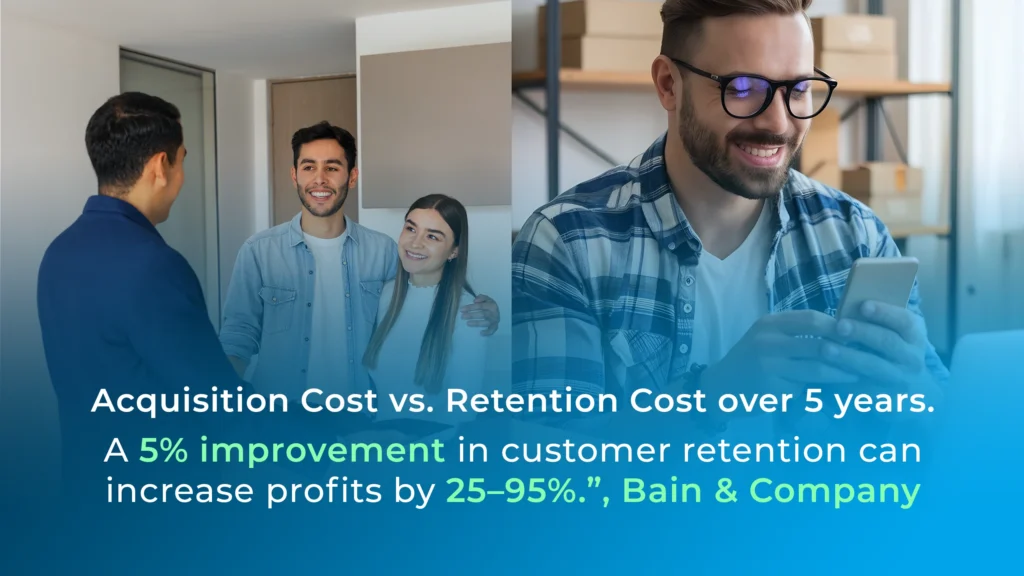
“A 5% improvement in customer retention can increase profits by 25–95%.”, Bain & Company
The brands winning in 2026 are not the ones recruiting the most. They’re the ones deepening relationships the fastest. This issue of NexLaunch Connect breaks down the three pillars of the Retention Revolution: loyalty economics, subscription models, and community-led engagement.

1. Why Is Retaining One Customer Worth More Than Acquiring Three New Ones?
Before strategy, let’s talk math. The economics of retention versus acquisition are more lopsided than most people realize, and understanding this is the first step toward building a customer retention strategy that actually works.
How Much More Does Acquisition Really Cost?
Acquiring a new customer costs anywhere from 5 to 25 times more than retaining an existing one. In direct selling, where acquisition involves recruiting, onboarding, training, and compensating a new distributor, those costs compound quickly.
Meanwhile, the upside of a loyal customer is measurable and significant:
- Existing customers generate 65% of a company’s revenue
- Repeat customers spend 67% more than first-time buyers
- The probability of selling to an existing customer is 60–70% vs. 5–20% for a new prospect
- Loyal customers are 50% more likely to try a new product at launch
📊 “Retention-focused companies grow 2.5x faster than those prioritizing acquisition.” — Artisan Growth Strategies, 2026

What Happens to Direct Selling Brands That Ignore Churn?
The direct selling industry has a churn challenge that rarely gets named directly. Distributors leave. Customers forget to reorder. The excitement window after onboarding closes fast if you don’t build systems to keep people engaged.
Research shows that after a first purchase, there’s roughly a 27% chance a customer returns. After a second purchase, that probability jumps to 54%. After a third, it climbs higher still.
What Can Direct Selling Brands Do Right Now?
- Map the post-purchase journey: What happens after someone buys or joins? Is there a systematic follow-up, or does it depend on the individual rep?
- Measure Lifetime Value (LTV), not just first-purchase revenue: If your reporting only tracks new sales, you’re flying blind on retention.
- Reward reorders as aggressively as you reward new sign-ups: If your comp plan only celebrates “new,” you’re accidentally signaling that loyalty doesn’t matter.
- Identify your most loyal 20%: They generate the majority of repeat revenue. What keeps them engaged? Build your retention model around that.
2. How Do Subscription Models Change the Growth Equation for Direct Selling Brands?
Here’s a question that’s reshaping how the smartest direct selling brands operate: What if your revenue didn’t depend on whether your customers remembered to reorder?
That’s the promise of subscription models. And in 2026, it’s no longer a “nice to have” — it’s becoming a competitive necessity.
Why Do Subscription Models Work Better Than One-Time Sales?
Subscription revenue is predictable, sticky, and compounding. When a customer subscribes, you shift from hoping they come back to knowing they will. That changes everything about how you plan, invest, and grow.
- Subscribers integrate the product into their routines, increasing retention probability with every delivery
- Subscription models reduce cognitive load, customers don’t have to “decide” to reorder; it just happens
- For distributors, a subscribed customer is a customer who doesn’t require constant re-selling
- Predictable monthly revenue enables smarter inventory, staffing, and growth investment
“The shift from transactional to subscription revenue is the single biggest structural change a direct selling brand can make to improve long-term stability.”

Which Subscription Models Are Working in Direct Selling in 2026?
- Auto-ship programs: The classic model, customers set a recurring cadence and receive incentives for staying enrolled. Easy cancellation builds more trust and reduces churn than lock-in tactics.
- Curated subscription boxes: Monthly themed selections that create discovery and surprise, reducing the “same product fatigue” that drives churn.
- VIP or loyalty tiers with subscription pricing: Members pay monthly or annually in exchange for discounted products, exclusive access, or priority service.
- Digital subscription add-ons: Access to training, coaching, or wellness content alongside physical product subscriptions, growing in adoption across the industry.
What Should Direct Selling Brands Avoid With Subscription Models?
Subscriptions become a source of resentment when managed poorly. Customers who feel trapped or confused about what they’re paying for will churn and leave negative reviews. The subscription experience, from sign-up to management to cancellation, must be frictionless and transparent.
The brands getting this right in 2026 treat the subscription relationship as an ongoing conversation, not a set-it-and-forget-it transaction.
3. How Does Community Build Customer Retention Better Than Any Loyalty Program?
The most powerful retention tool in 2026 isn’t a loyalty points system or a subscription plan. It’s belonging.
When a customer feels like they’re part of something — a community, a movement, a shared identity — they don’t leave. Not because they can’t, but because they don’t want to. That’s the difference between retention that’s engineered and retention that’s earned.
Why Is Peer-to-Peer Community More Powerful Than Brand-to-Customer Messaging?
Traditional retention strategies flow from brand to customer: you send an email, offer a discount, ask for a review. Community-led retention is peer-to-peer: customers encourage each other, share results, celebrate wins, and advocate for the brand without being asked.
This is especially powerful in direct selling, where results are deeply personal, health transformations, lifestyle changes, financial wins. These stories resonate most within a trusted community, not when broadcast by a brand.
📊 “55.3% of consumers are loyal to a brand because they love the products, but community is what turns product love into brand identity.”, DemandSage, 2026

What Does Community-Led Retention Look Like in Practice?
- Private digital communities: WhatsApp groups, Facebook Groups, Discord servers, or in-app communities where members connect around shared goals, results, and lifestyle content.
- Challenges and recurring events: Monthly challenges, live sessions, and virtual or in-person events that give members ongoing reasons to show up.
- User-generated content (UGC): Encouraging customers to share their experiences, and featuring that content, creates a flywheel of social proof and community identity.
- Recognition rituals: Celebrating milestones (30-day streaks, reorder anniversaries, referrals) within the community reinforces belonging and deepens loyalty.
- Field-led micro-communities: In direct selling, the distributor is the community leader. Equipping your field with the tools and frameworks to build micro-communities around their customer bases is one of the highest-leverage retention investments you can make.
How Does Community Convert Customers Into Future Distributors?
Community doesn’t just retain customers, it converts them into advocates, and advocates into distributors. When you invest in community, you’re not just reducing churn. You’re building a pipeline of your most motivated and authentic future business builders.
The brands that win the next decade in direct selling will build communities so strong that customers become recruiters, not because they’re incentivized to, but because they genuinely believe in what they’re part of.
How Do You Shift From an Acquisition Mindset to a Retention Strategy That Drives Real Growth?
The Retention Revolution isn’t about abandoning acquisition. New customers are always the lifeblood of growth. But in a world where acquisition costs are surging, customer expectations are rising, and brand loyalty is at historic lows, the brands that will lead the next decade are those that treat retention as a core growth strategy , not an afterthought.
That means:
- Measuring what happens after the first purchase, not just during it
- Building subscription models that create predictable, compounding revenue
- Investing in community infrastructure that turns customers into advocates
- Rewarding your field for depth of customer relationships, not just breadth of recruitment
- Treating every retained customer as a marketing asset, because they are
Retention is not a defensive strategy. It’s the most offensive growth move you can make in 2026.
Key Takeaways: The Retention Revolution in Direct Selling
📋 Copy-ready for LinkedIn, newsletters, or social posts
- Acquiring a new customer costs 5–25x more than retaining one, and CAC has risen 222% in five years.
- A 5% improvement in retention can boost profits by 25–95% (Bain & Company).
- Repeat customers spend 67% more and generate 65% of company revenue.
- Subscription models shift growth from transactional to predictable and compounding.
- Community-led retention is the highest-trust, lowest-cost retention strategy available to direct selling brands.
- The most powerful pipeline in direct selling: Loyal Customer → Community Member → Brand Advocate → Distributor.
About NexLaunch Connect
NexLaunch Connect is a monthly newsletter for direct selling leaders, brand builders, and field executives who want to stay ahead of the strategies shaping the future of the industry. Each issue explores one big idea at the intersection of marketing, technology, and community , with actionable insights you can apply immediately.
NexLaunch Connect is a monthly newsletter for direct selling leaders, brand builders, and field executives who want to stay ahead of the strategies shaping the future of the industry. Each issue explores one big idea at the intersection of marketing, technology, and community, with actionable insights you can apply immediately.
👉 Subscribe to NexLaunch Connect